 English
 Urdu
Urdu



Most plant deaths in Pakistani homes have nothing to do with sunlight or watering habits. They come down to the wrong pot. A money plant drowning in a sealed ceramic pot with no drainage hole. A guava tree slowly choking in a container two sizes too small. A raat ki rani planted in a black plastic bag baking on a rooftop in July.
The pot is not just a container. It controls how fast soil dries, how much air reaches roots, and how much heat transfers in Pakistan's climate. Getting it right from the start is the simplest thing you can do to keep plants alive.
This guide covers every type of plant pot available in Pakistan, what each one does well, what it does badly, and which plants belong in which pot.
Clay Pots (Mitti ke Gharray)
Clay pots are the oldest planting container in Pakistan and still one of the best choices for most outdoor plants. They are porous, which means air and water move through the walls of the pot. This keeps roots cooler, prevents waterlogging, and mimics how soil behaves in the ground.
In Pakistan's summer heat, this porosity is especially valuable. A plant in a clay pot stays measurably cooler than the same plant in a black plastic or dark fiber pot sitting in direct sun. The water that evaporates through the clay walls acts as a natural cooling system for the root zone.
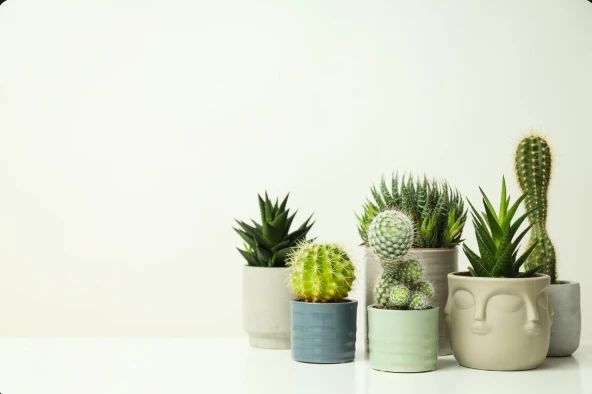
Clay pots work best for plants that prefer drier conditions between waterings. Cacti, succulents, Mediterranean herbs like rosemary and lavender flower, and most flowering shrubs do well in clay. Raat ki rani plant placed in a clay pot in full sun on a terrace performs noticeably better than the same plant in plastic because the soil dries and reoxygenates between waterings the way the plant prefers.
The downside is weight. Large clay pots are heavy and fragile. If you are gardening on a rooftop and concerned about load, smaller clay pots for herbs and flowering plants are practical, but a 50 litre clay pot for a mango tree is not the right choice.
Standard sizes available in Pakistan run from 4 inch small herb pots up to 18 or 20 inch large containers. The most common sizes sold at nurseries are 6, 8, 10, and 12 inch.
Ceramic Pots
Ceramic pots are clay pots fired at high temperature, usually with a glaze on the outside. The glaze seals the walls and removes the porosity that makes unglazed clay breathe.
For plants, this means ceramic pots behave more like plastic than clay. They hold moisture longer, do not allow air movement through the walls, and can lead to waterlogging if drainage holes are absent or too small.
Ceramic pots are popular in Pakistan for indoor use because they look good. A well-glazed ceramic pot with a money plant or peace lily on a shelf genuinely adds to a room. For decoration they work well. For plant health, you need to be more careful.
Ceramic pots handle Pakistan's outdoor conditions less well than clay. The glaze can crack in extreme temperature swings, especially in northern areas where winter nights are cold. For outdoor use, stick to unglazed clay or plastic.
Plastic Pots
Plastic pots are the most widely used containers in Pakistani nurseries and for good reason. They are lightweight, cheap, retain moisture longer than clay, and come in every size from a 3 inch seedling pot to a 40 litre large container.
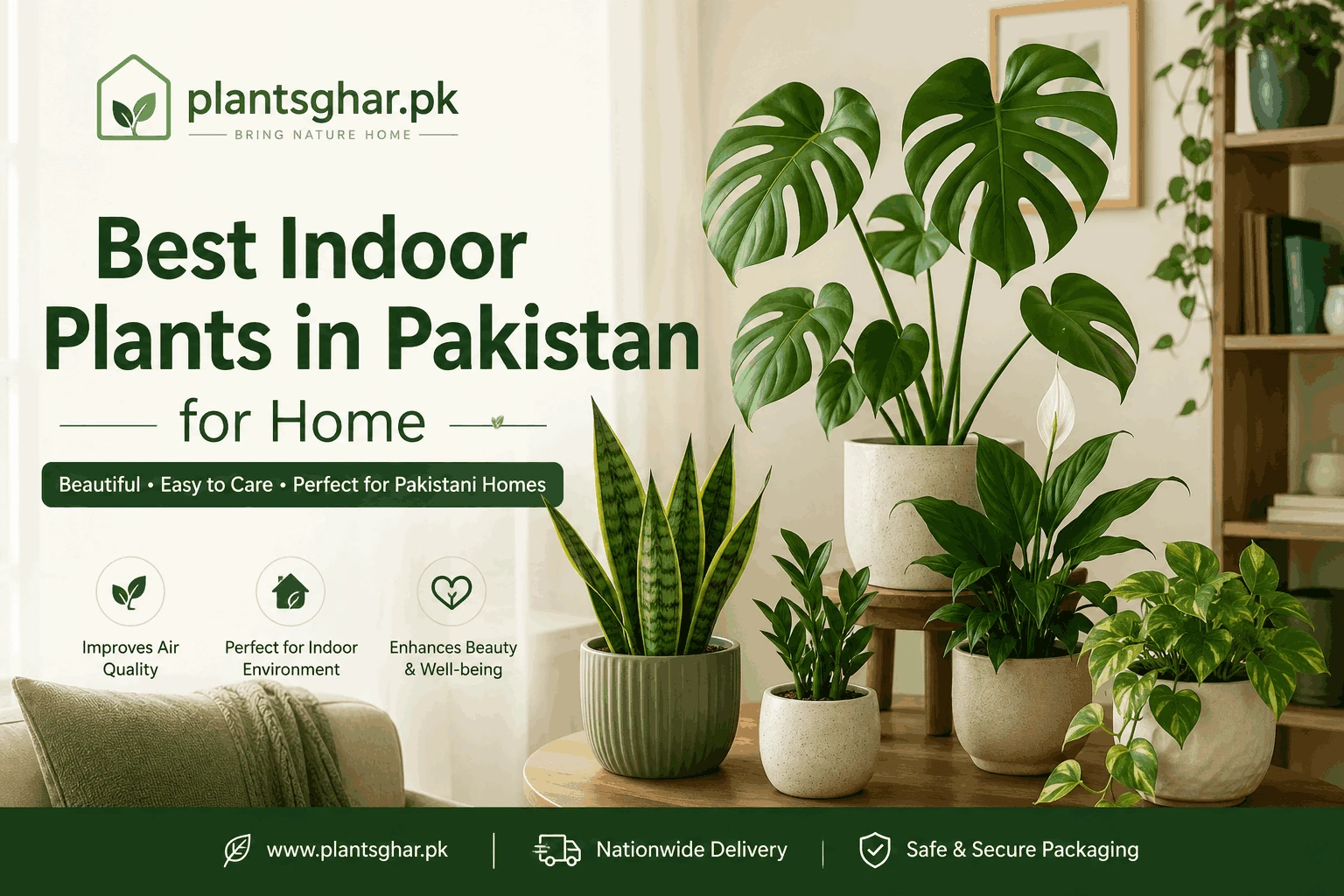
For indoor plants in Pakistan, plastic is often the practical choice. Snake plant, ZZ plant, aglaonema, and peace lily all do fine in plastic because they are not being watered heavily and they sit in moderate light rather than full sun. The soil drying slightly more slowly actually works in their favor.
The problem with plastic in Pakistan's outdoor conditions is heat absorption. Dark-colored plastic pots sitting in full sun in a Lahore or Karachi summer absorb and transfer heat into the root zone. In July, the soil inside a black plastic pot in full sun can reach temperatures that damage roots. For full-sun outdoor use, choose light-colored plastic pots or wrap the outside with something that insulates.
Plastic pots are ideal for vegetable seedlings, short-term plants, and as nursery containers before transplanting into a permanent home.
Grow Bags
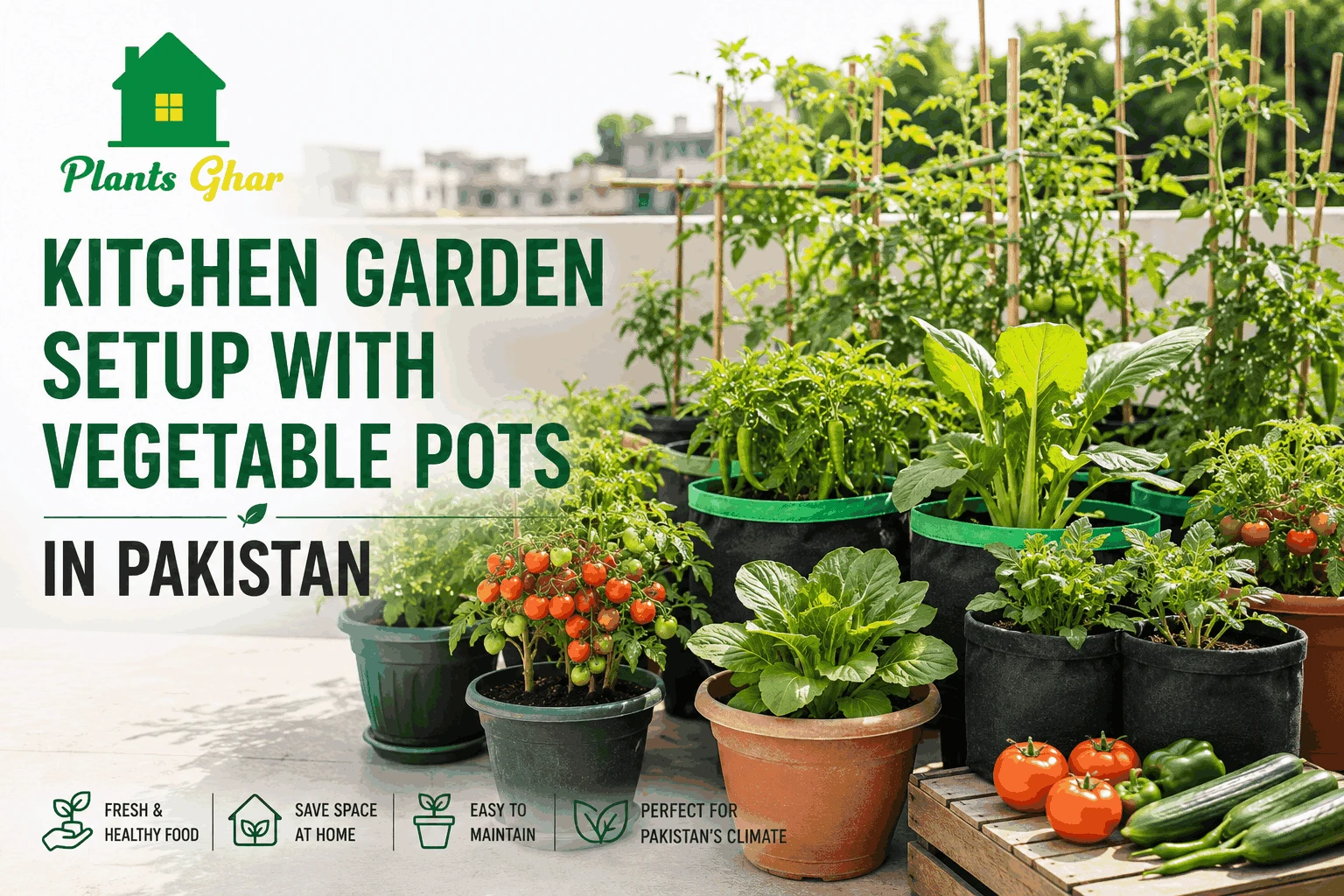
Grow bags are the best containers for rooftop and terrace gardening in Pakistan. They are made from breathable fabric or non-woven material which allows air movement through the walls the same way clay does, while being far lighter than any clay or ceramic pot.
When roots reach the edge of a fabric grow bag, exposure to air naturally stops root growth at that point rather than letting roots circle the container the way they do in solid-walled pots. The result is a dense, fibrous root system rather than a circling mass. Plants in grow bags generally establish faster and produce better than the same plants in solid containers of the same size.
For fruit plants and vegetables, grow bags are the strongest recommendation. Tomatoes, chilies, guava, lemon, pomegranate, and bhindi all grow excellently in 15 to 25 litre fabric grow bags. The weight advantage is significant on rooftops where load matters.
The one downside is appearance. Grow bags do not look decorative. For a balcony or living space where you want things to look neat, use a grow bag inside a decorative outer pot or planter. Sizes available in Pakistan run from 5 litre small herb bags to 40 litre large fruit tree bags.
Fiber and Fiberglass Planters
Fiber and fiberglass planters sit between decorative ceramic and functional plastic. They are lightweight, come in attractive finishes and large sizes, handle outdoor conditions well, and do not crack in temperature swings.
For large outdoor planters on terraces and in gardens, fiber planters are one of the best options in Pakistan. A large fiber planter at 30 to 40 litres weighs a fraction of what an equivalent clay or ceramic container would weigh. They are also available in sizes that clay and ceramic never reach practically. Fifty to 100 litre fiber planters for specimen trees are genuinely available and usable.
The quality varies significantly. Cheap fiber pots degrade in Pakistan's strong UV exposure within two seasons. Good quality fiberglass planters last 5 to 10 years outdoors.
Concrete and Stone Planters
Concrete planters are heavy, durable, and look strong in a garden setting. They work well in permanent outdoor installations where you are not moving the pot. A large concrete planter for an olive tree or bougainvillea in a courtyard will outlast every other pot type.
The weight makes them impractical for rooftops or balconies. They are also poor insulators. Concrete absorbs heat in summer and cold in winter, both of which stress roots in Pakistan's climate extremes. For permanent garden installation with no structural concerns, concrete works. For anything mobile or on an upper floor, it does not.
Choosing the Right Pot Size
More plants in Pakistan die from pots that are too large than from pots that are too small. A small plant in a large pot sits in a volume of wet, airless soil that its root system cannot use. The unused wet soil stays anaerobic and promotes root rot.
The rule is simple. Pot size should be about 2 inches larger in diameter than the plant's current root ball. When you see roots coming out of drainage holes or growth slowing significantly, move up one size. Do not jump from a 6 inch pot to a 14 inch pot in one step.
Small Herbs
Niazbo, coriander, mint, and basil grow well in a 6 to 8 inch pot or a 5 litre grow bag. These plants have shallow root systems and do not need much volume. A larger pot actually causes more problems than a smaller one for herbs.
Indoor Plants
Money plant, snake plant, peace lily, and aglaonema start in an 8 to 10 inch pot and move to a 12 inch when roots fill the current container. Large indoor plants like fiddle leaf fig or bird of paradise need a 12 to 14 inch pot. Do not rush sizing up for indoor plants. A slightly snug pot keeps growth controlled and manageable indoors.
Vegetables
Tomatoes and chilies need a 12 inch pot or 15 litre grow bag at minimum. Bhindi, karela, and tori do better in a 14 to 16 inch pot or 20 litre grow bag. Smaller containers for vegetables produce noticeably weaker plants and lower yields. If you are unsure, go one size larger for vegetables rather than one size smaller.
Fruit Trees
Raat ki rani, jasmine, and bougainvillea grow well in a 12 to 16 inch pot or 20 litre grow bag. Guava and pomegranate need a 20 to 25 litre container. Mango and lemon do best in a 30 to 40 litre grow bag or large fiber planter. These are the minimum sizes for productive fruiting. Going larger than recommended is fine for fruit trees. Going smaller limits production noticeably.
Drainage — The One Thing That Matters More Than Pot Type
Every pot needs a drainage hole. This is not optional. A beautiful ceramic pot with no drainage hole will kill any plant you put in it within one or two months in Pakistan's watering conditions.
If a pot you buy has a drainage hole that seems too small, widen it or buy a different pot. If it has no hole at all, use it as a decorative cover for a smaller plastic pot with drainage.
Place pots on feet, bricks, or pot risers so the drainage hole is not blocked by the surface underneath. A pot sitting flat on a solid surface with the hole pressed against the ground drains poorly regardless of how good the hole is.
Where to Buy Plant Pots in Pakistan
PlantsGhar stocks plant pots, grow bags, and containers alongside plants, fertilizers, and gardening supplies. Ordering pots with your plants in the same delivery means everything arrives together and you are not waiting on separate orders from different sources.
For indoor plants, outdoor flowering plants, vegetable seedlings, and the pots to grow them in, PlantsGhar delivers across Pakistan to Lahore, Karachi, Islamabad, and other major cities with packaging that keeps both plants and containers safe in transit.
Need Plants and Pots Together?
Order plants, grow bags, fertilizers, and gardening supplies in one delivery. PlantsGhar ships across Pakistan.
Shop PlantsGhar Now →Frequently Asked Questions
Which plant pot is best for Pakistan's summer heat?
Clay pots are best for outdoor plants in Pakistan's summer because the porosity keeps roots cooler through evaporative cooling. For rooftops and terraces, grow bags are the best choice because they are lightweight and also allow air movement through the walls.
Can I use ceramic pots for outdoor plants in Pakistan?
Glazed ceramic pots work outdoors in moderate climates but can crack in the temperature extremes of northern Pakistan. They also retain moisture longer than clay, which can cause root rot for plants that need to dry between waterings. Use unglazed clay or fiber planters for outdoor use in Pakistan.
What size pot does a money plant need in Pakistan?
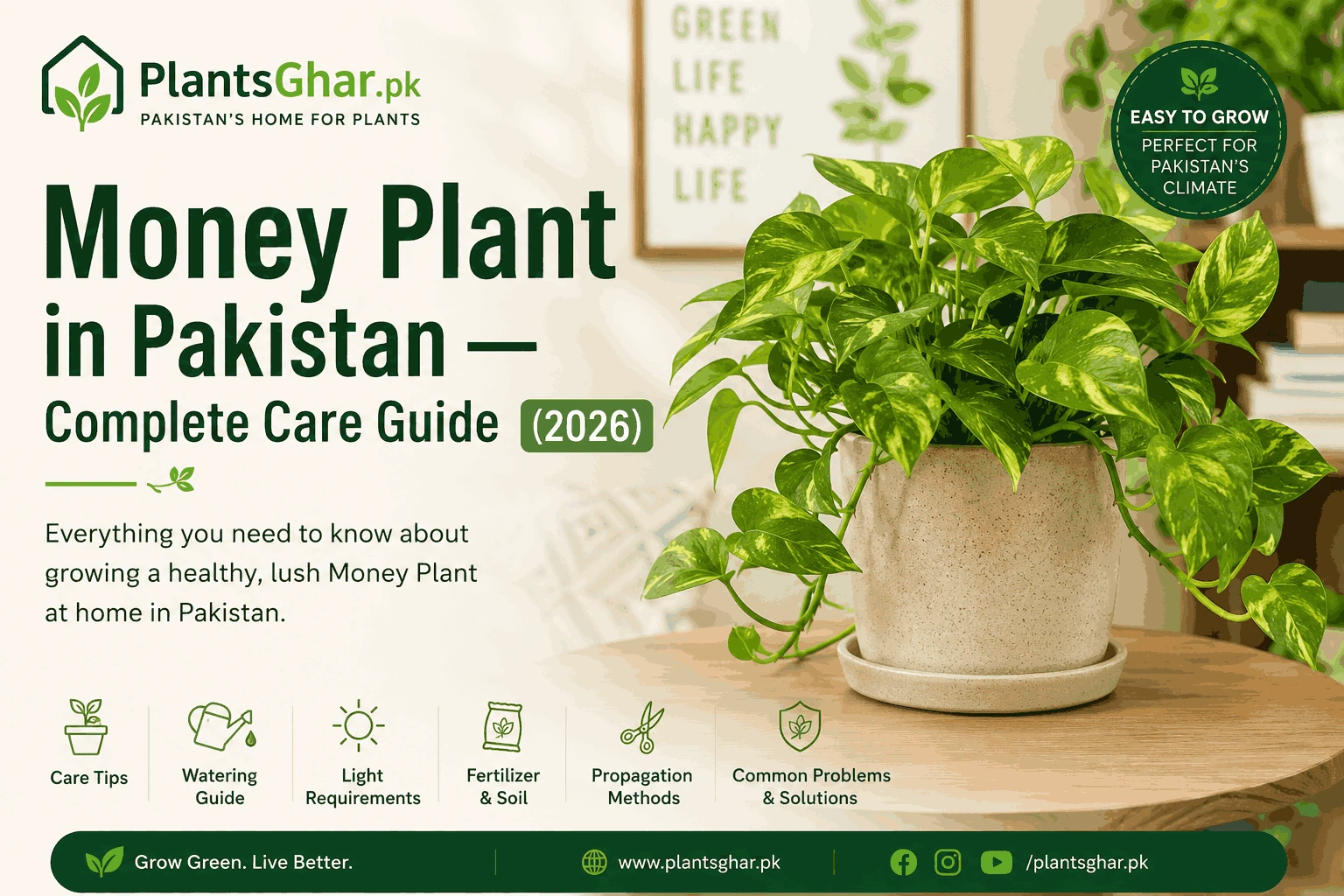
A money plant grows well in an 8 to 10 inch pot. It does not need a large container and actually produces more compact, attractive growth in a slightly snug pot than in an oversized one. Change the water every 7 to 10 days if growing in water.
What is the difference between a clay pot and a ceramic pot?
Clay pots are unglazed and porous — air and water move through the walls. Ceramic pots are clay fired at high temperature with a glaze that seals the walls. Clay breathes and dries faster, ceramic holds moisture longer and looks more decorative. For most plants in Pakistan, unglazed clay is better for outdoor use and ceramic for indoor decoration.
Are grow bags better than plastic pots for vegetables?
Yes. Grow bags outperform plastic pots for vegetables in Pakistan because the breathable fabric prevents root circling, allows air pruning, and keeps root temperatures lower in summer. A 15 to 20 litre grow bag for tomatoes or chilies produces better results than the same size solid plastic pot.
What pot size do I need for a lemon plant in Pakistan?
Start a young lemon plant in a 12 to 14 inch pot and move to a 20 to 25 litre container once roots fill the first pot. For a productive mature lemon plant, a 25 to 30 litre grow bag or large fiber planter gives the best results.
Do I need drainage holes in every pot?
Yes. Every pot needs at least one drainage hole. Without drainage, excess water sits in the soil, oxygen cannot reach roots, and root rot develops quickly. Never plant directly into a pot without drainage, regardless of how attractive it looks.
Where can I buy plant pots online in Pakistan?
PlantsGhar sells plant pots, grow bags, and planters alongside plants and gardening supplies with delivery across Pakistan. You can order pots and plants together in one order.
How often should I repot my plants in Pakistan?
Most plants in containers need repotting every 1 to 2 years. Signs that a plant needs repotting include roots coming out of drainage holes, growth slowing noticeably despite regular feeding, soil drying out very fast after watering, or the plant becoming top-heavy and unstable.
Can I use fiber planters outdoors in Lahore and Karachi?
Yes. Good quality fiberglass planters handle Pakistan's outdoor conditions well and are one of the best choices for large outdoor containers. They are lightweight, do not crack in temperature swings, and are available in sizes that clay and ceramic cannot practically reach.