 English
 Urdu
Urdu







Kitchen Garden in Pakistan: The Complete Guide to Growing Your Own Vegetables at Home (2026)
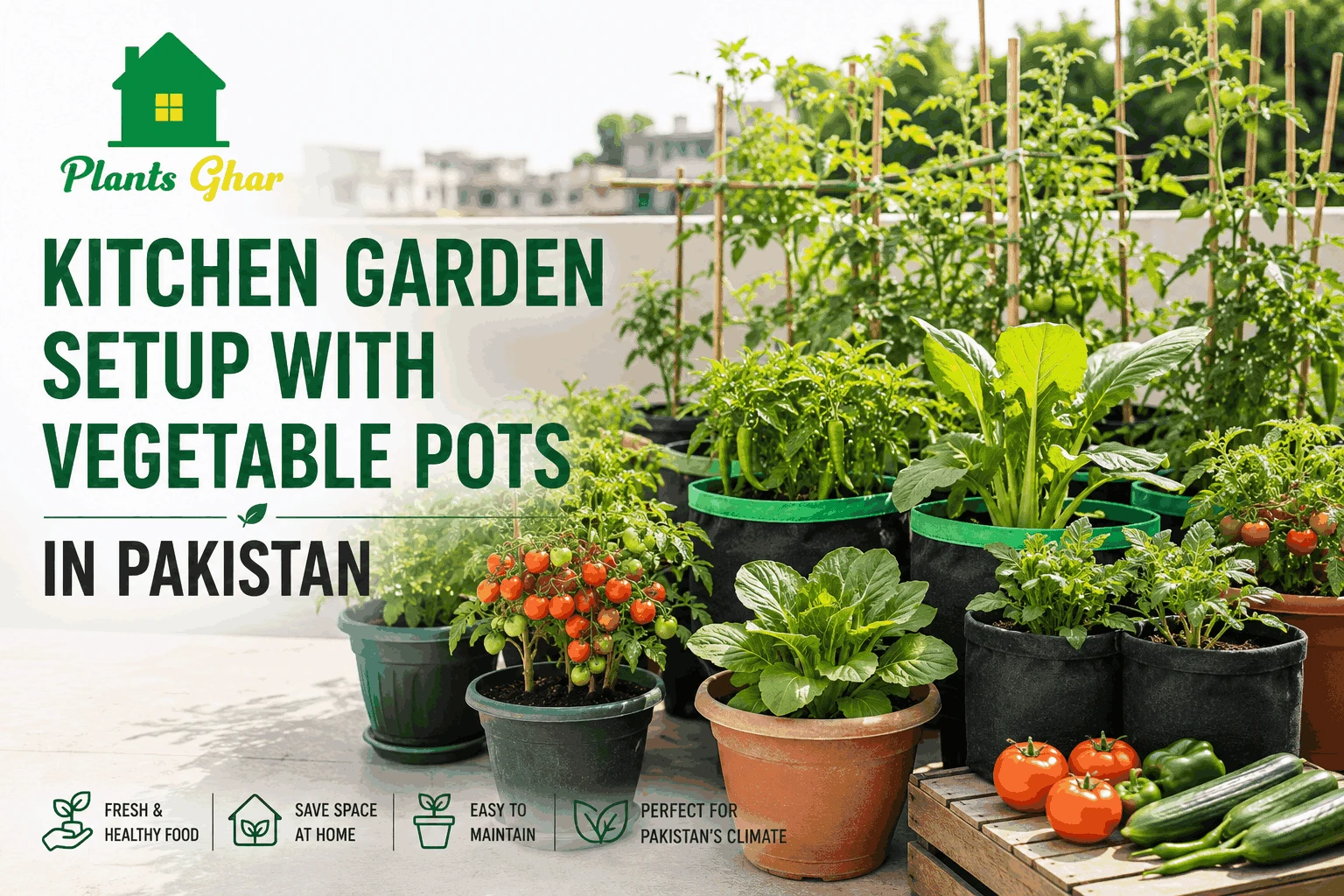
This guide walks through everything that actually matters for a kitchen garden in Pakistan's climate: what to grow and when, how to prepare soil that isn't rock-hard clay, a realistic sowing-to-harvest timeline, and the fixes for the problems every new gardener runs into; yellowing leaves, seeds that don't germinate, and pots that dry out in an afternoon.
Why Start a Kitchen Garden at Home
A kitchen garden earns its keep faster than people expect. A single chilli plant can produce for six months. A packet of spinach seeds costing under Rs. 100 can replace several trips to the sabzi mandi. Beyond the savings, home-grown vegetables in Pakistan are usually free of the pesticide residue common in market produce, and there's a genuine difference in taste between a tomato picked ripe off the vine and one picked green for transport.
There's also a practical reason it's grown so popular here in the last few years: rising vegetable prices have made a Rs. 500 packet of mixed seeds one of the best-value purchases a household can make, especially in a joint family setup where the same tomatoes, onions, and green chillies get used daily.
Pakistan's Climate: The One Thing That Decides Success or Failure
Pakistan doesn't have a single growing season — it has three distinct sowing windows, and this is where most first-time gardeners lose their crop before it even sprouts.
Summer sowing (February – April): This is the main season for heat-loving vegetables. Tomato, cucumber, okra (bhindi), bitter gourd (karela), squash (tinda), melons, and most gourds go in during this window, before the peak summer heat of June arrives.
Monsoon window (July – August): A shorter, secondary sowing period for fast-growing vegetables like cucumber, okra, and some leafy greens that can handle humidity.
Winter sowing (September – November): This is when spinach, coriander, radish, carrot, cauliflower, cabbage, turnip, peas, and lettuce are sown. Winter vegetables in Pakistan generally struggle far less with pests than the summer crop and are the easiest starting point for a first-time gardener.
Sowing tomato seeds in December, or spinach seeds in June, is the single most common reason a beginner's kitchen garden fails. If you only take one thing from this guide, take the seasons.
What to Grow: A Season-Wise Vegetable List
Best summer vegetables for Pakistan:
- Tomato (Florida Royal and hybrid varieties handle heat well)
- Okra / Lady Finger (Bhindi)
- Cucumber (Kheera)
- Bitter Gourd (Karela)
- Apple Gourd / Tinda
- Sweet Melon (Kharbooza)
- Chillies (green and red)
Best winter vegetables for Pakistan:
- Spinach (Palak)
- Coriander (Dhania)
- Radish (Mooli)
- Carrot (Gajar)
- Cauliflower (Phool Gobhi)
- Cabbage (Band Gobhi)
- Green Peas (Matar)
- Lettuce
Easiest vegetables for absolute beginners: Coriander, spinach, radish, and okra germinate quickly and forgive minor mistakes — start here before moving on to fussier crops like cauliflower or melons.
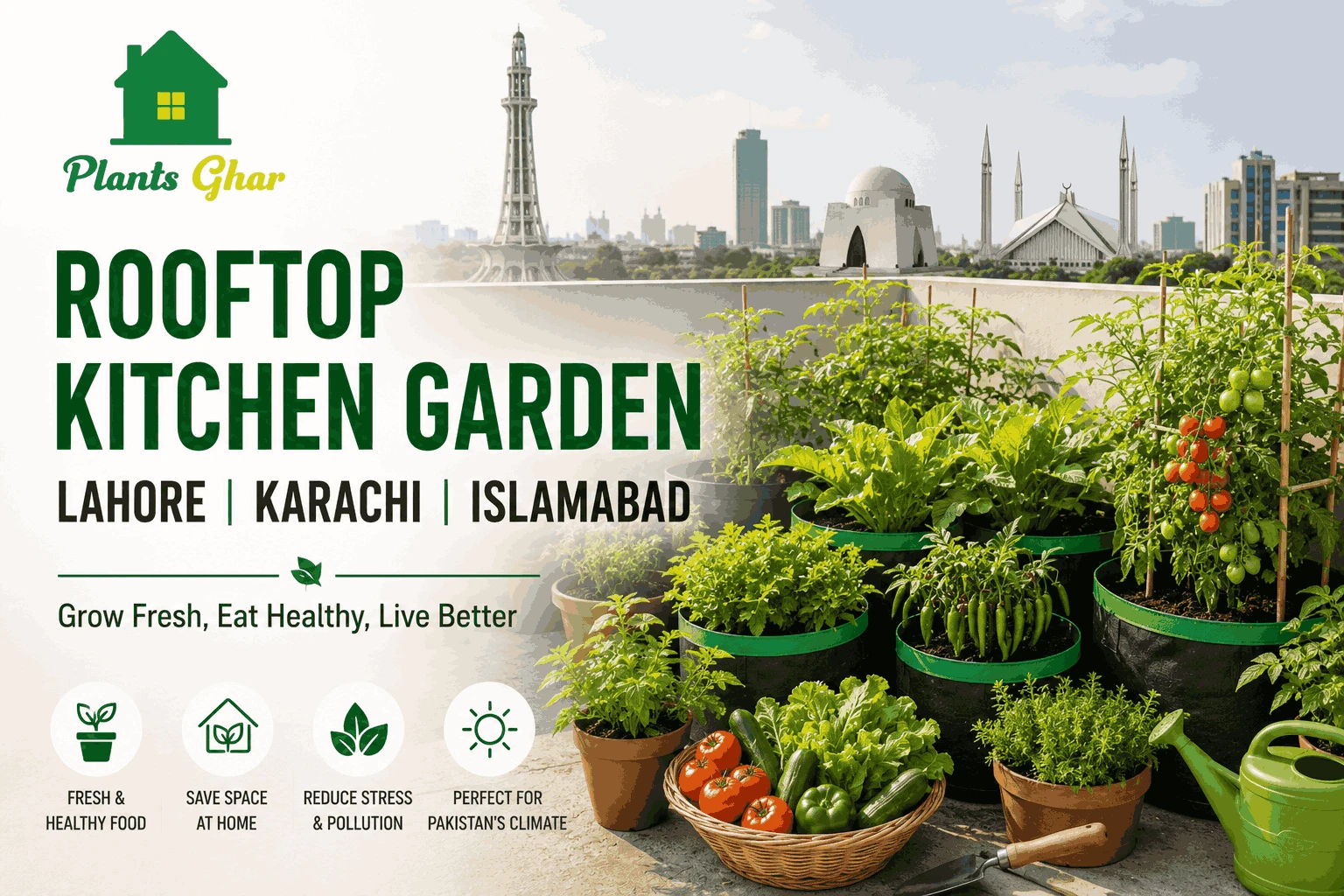
Containers, Grow Bags, or Ground: What Works in Pakistani Homes
Most urban kitchen gardens in Pakistan are container gardens by necessity, and that's not a compromise — containers actually make it easier to control soil quality and drainage, which are the two biggest problems with native Pakistani soil (often heavy clay that waterlogs easily).
- Grow bags are the best value option. They're breathable, prevent root rot, and a 12–15 inch bag comfortably grows a full tomato or chilli plant.
- Clay (matti) pots keep roots cooler in summer heat, which matters for a Lahore or Multan rooftop that can hit surface temperatures well above 45°C.
- Plastic containers are lighter and cheaper but need extra drainage holes drilled in if they don't already have enough.
- Raised ground beds work well if you have even a small lawn strip, but the native soil almost always needs to be broken up with sand and compost first.
For rooftop or balcony gardening in Pakistan, stick to containers and grow bags — the added weight of large ground beds isn't something most roof structures are built for.
Soil Preparation: Getting It Right Before You Sow
This is the step people skip, and it's the step that decides whether seeds germinate at all. Straight garden soil from most Pakistani cities is compacted clay-heavy dirt that drains poorly and suffocates roots.
A reliable home-mix ratio:
- 40% garden soil
- 30% compost or well-rotted farmyard manure (gobar khaad)
- 20% coarse sand for drainage
- 10% coco peat or dried leaves for moisture retention
Mix this thoroughly and let it sit for a few days before sowing. If you're short on time, a ready-made potting mix paired with an NPK fertilizer at planting time gets you a similar result with far less manual labour.
Step-by-Step: Sowing to First Harvest
- Pick the right seed for the season using the list above — this single decision matters more than everything else combined.
- Prepare the container with drainage holes and the soil mix described above.
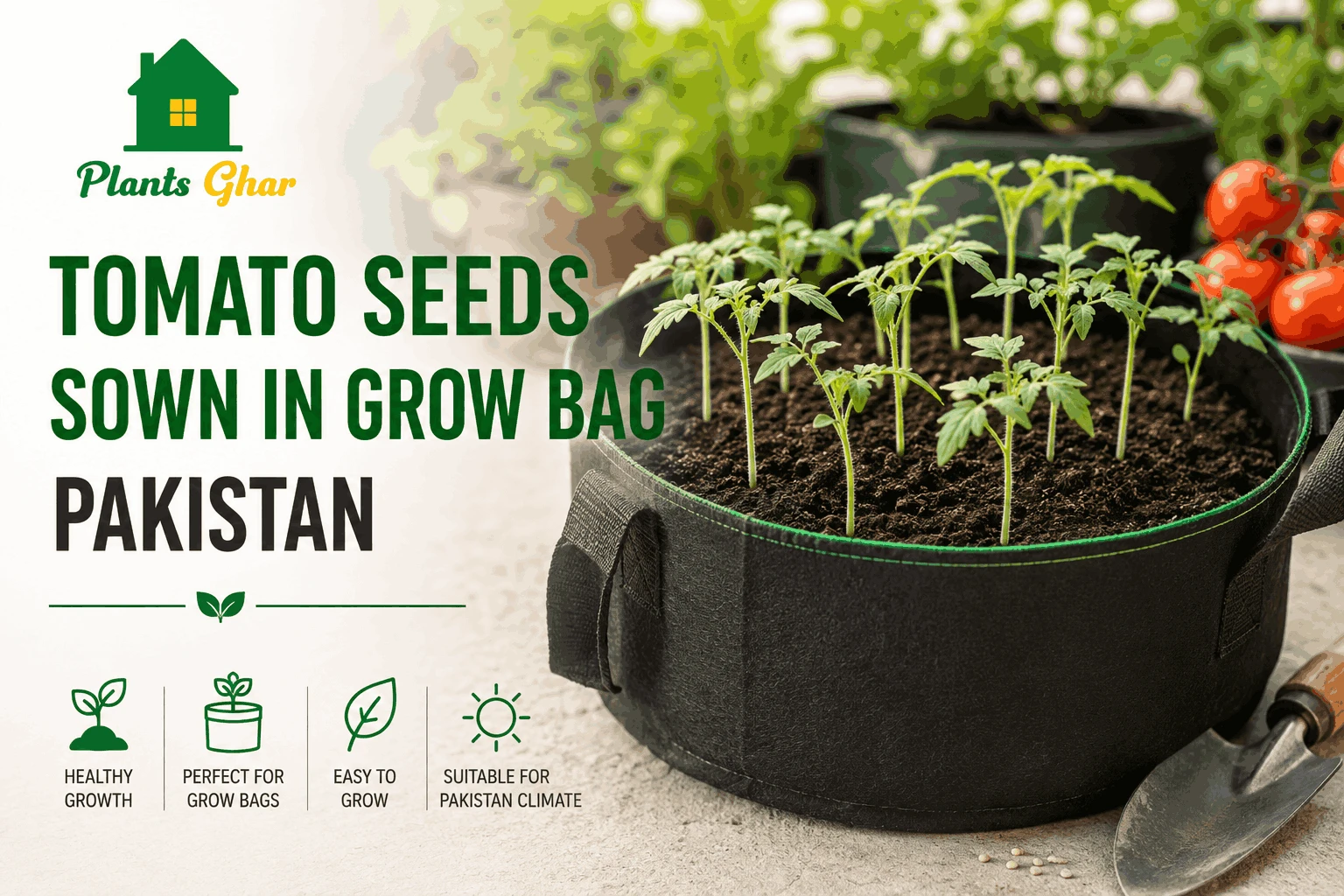
- Sow at the correct depth — as a rule of thumb, plant a seed roughly twice as deep as the seed itself is wide. Fine seeds like coriander and lettuce need only a light soil dusting on top.
- Water gently right after sowing, using a fine shower or watering can so seeds aren't displaced.
- Keep soil consistently moist (not soaked) until germination, which typically takes 5–12 days depending on the vegetable.
- Move to 5–6 hours of direct sunlight once seedlings have their first true leaves.
- Thin out weak seedlings so the strongest one or two per pot get full access to nutrients.
- Start a fertilizer schedule around the 3–4 week mark, once the plant is established.
- Harvest regularly — for crops like okra and chillies, frequent picking actually encourages the plant to keep producing.
Watering and Fertilizing Without Overdoing It
Overwatering, not underwatering, kills more container vegetables in Pakistan than anything else. Check the top inch of soil with a finger before watering — if it's still damp, wait a day. Summer containers may need daily watering in peak heat; winter crops need far less.
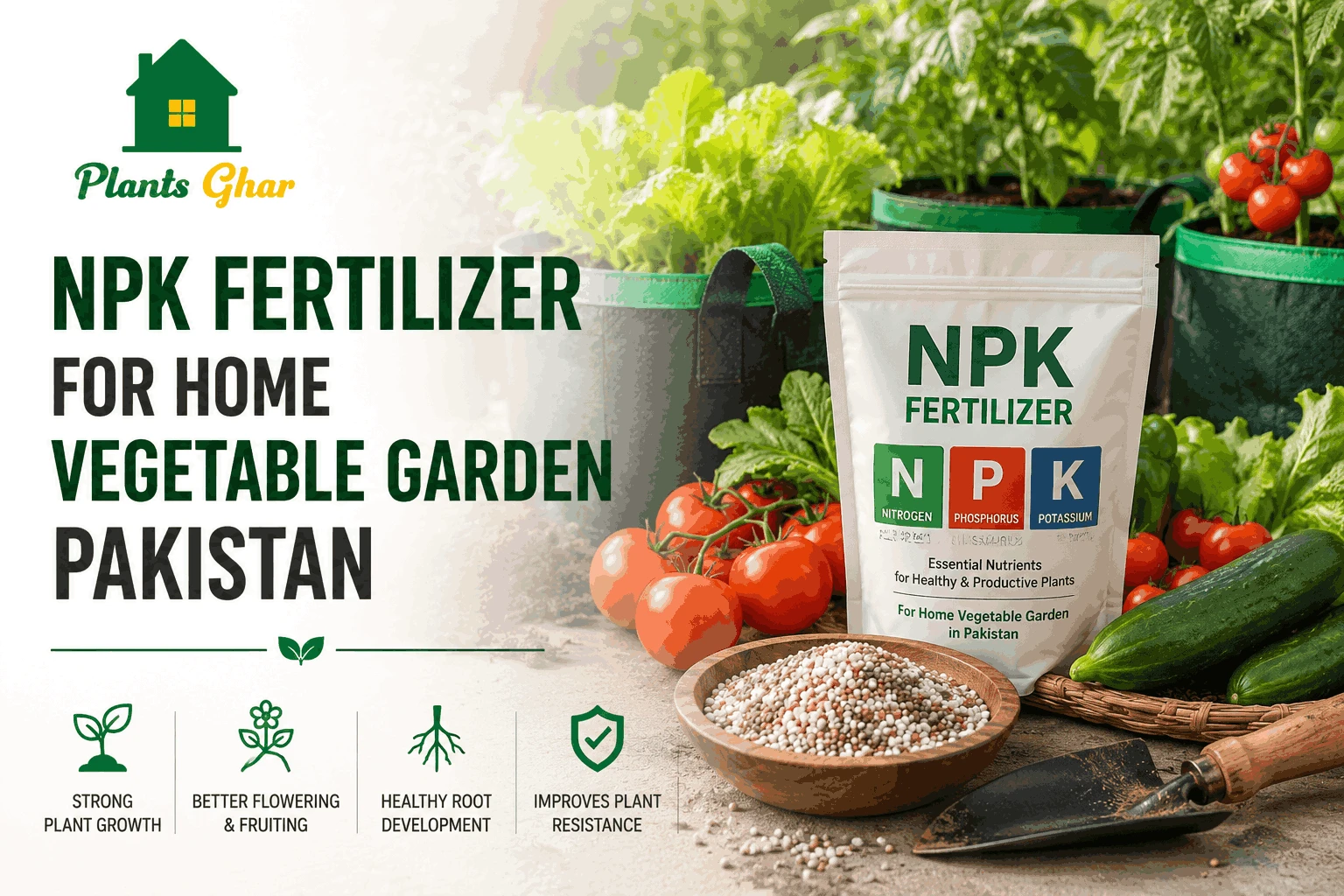
For feeding, a balanced NPK fertilizer during the vegetative stage supports leafy growth, while a higher-phosphorus feed helps once plants start flowering and fruiting. Rooting hormone powder is worth having on hand too, especially if you're propagating cuttings from herbs like mint or basil rather than starting from seed.
Common Kitchen Garden Problems in Pakistan (And the Fix)
Seeds not germinating: Usually old or poor-quality seed, soil that dried out between waterings, or sowing too early/late for the season.
Yellowing leaves: Most often overwatering and poor drainage rather than a nutrient issue — check the container drains freely before reaching for fertilizer.
Leggy, weak seedlings: Not enough direct sunlight. Most vegetables need a minimum of 5 hours of direct sun; anything less produces thin, stretched-out growth.
Pest damage on leaves: Aphids and whiteflies are common on chilli and tomato plants in warmer months — a neem-oil spray applied early, before an infestation spreads, is usually enough for a home garden.
Flowers dropping without fruiting: Common in extreme summer heat on tomatoes and peppers — this is heat stress, and it typically resolves once temperatures ease rather than indicating a plant problem.
What You Need to Get Started
A basic starter kit for a home kitchen garden in Pakistan doesn't need to be expensive:
- Vegetable seeds suited to the current season
- Grow bags or containers with drainage
- A basic potting mix or compost
- An NPK fertilizer for feeding
- A watering can with a fine rose/shower head
- A hand trowel and a pair of pruning scissors
All of this is available in one place through PlantsGhar's seeds, fertilizers, and tools categories, sourced from verified nurseries across Pakistan rather than a single unverified seller — which matters when seed quality is the difference between a full harvest and an empty pot.
Frequently Asked Questions
When should I start a kitchen garden in Pakistan? The two main windows are February–April for summer vegetables and September–November for winter vegetables. Starting right at the beginning of either window gives plants the longest possible growing period before extreme heat or cold sets in.
What vegetables grow fastest in a Pakistani kitchen garden? Radish and coriander are among the fastest, often ready for a first harvest within 4–5 weeks of sowing, making them good confidence-builders for new gardeners.
Can I grow a kitchen garden without a garden — just a balcony or rooftop? Yes. Containers and grow bags placed on a balcony or rooftop with at least 5–6 hours of direct sunlight work for nearly every common vegetable, including tomatoes, chillies, and leafy greens.
How often should I water container vegetables in summer? Check soil moisture daily during peak summer — most containers need watering once a day, sometimes twice in extreme heat, but always check that the top inch of soil has actually dried before adding more.
Do I need fertilizer if I already used compost in the soil mix? Compost improves soil structure and adds some nutrients, but container plants use up nutrients faster than ground soil. A supplementary NPK feed from around 3–4 weeks after sowing keeps growth steady through the full harvest period.
Why didn't my seeds germinate at all? The most common causes are old or low-quality seed stock, soil drying out during the germination window, or sowing outside the correct seasonal window for that vegetable.
What's the easiest vegetable for a complete beginner to grow in Pakistan? Coriander, spinach, and radish are the most forgiving — quick to germinate, tolerant of minor watering mistakes, and ready to harvest within 4–6 weeks.
Where can I buy good-quality vegetable seeds online in Pakistan? PlantsGhar connects you with verified nurseries across Pakistan offering vegetable seeds, grass seeds, fertilizers, and gardening tools with home delivery — everything needed for a kitchen garden in a single order.
Start Small, Get It Right, Then Expand
A kitchen garden in Pakistan doesn't need to start big. Two or three grow bags with the right seasonal seed, decent soil, and consistent watering will outperform an ambitious ten-pot setup that gets neglected. Get the timing right, get the soil right, and the rest is mostly just showing up with a watering can.
Ready to start? Browse vegetable and flower seeds, fertilizers, and gardening tools on PlantsGhar, sourced from verified nurseries across Pakistan with nationwide home delivery.
Recent Posts
Kitchen Garden in Pakistan: The Complete Guide to Growing Your Own Vegetables at Home (2026)





Subscribe to our newsletter for regular updates about Offers, Coupons & more
Follow Us
Mobile Apps